The farm
Silvopasture: grazing among the trees
Separately from the carbon project, we're establishing mixed fodder silvopastures on our Pig Creek block for grazing, drought resilience and shelter. We're planting about 20,000 more trees and shrubs for the bees and for fodder, which aren't part of the carbon project.

What silvopasture is
In general, silvopasture means trees, shrubs and pasture growing together in the same paddock, with livestock grazing among them. It's an old idea with a fancy name. The trees give shelter and shade, the grass keeps feeding the animals, and the land can do more than it would as bare paddock or closed bush.
On our farm it will happen in two separate places. The carbon project area is all about the trees. The fodder plantings at Pig Creek are separate, and they're there to feed the animals.
Grazing under the trees

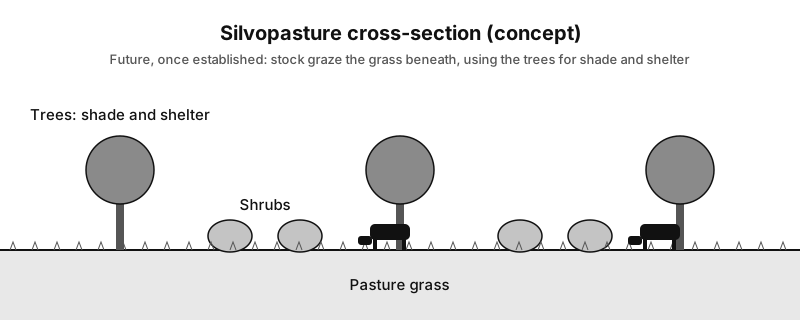
Grazing under young trees needs a light touch, which is one reason we're moving towards small-breed Dexter cattle. They're smaller and gentler on the ground. Once the trees are big enough, they'll graze the grass and use the trees for shelter and shade, and they never eat the carbon trees. Once it's all established we may run meat sheep in there too.
Tree fodder for the animals

Undergoing works
Grass does most of the work on our farm, but it has its limits. When a dry summer bites or the frosts hold growth back up here on Tower Hill, pasture can stall for weeks. Trees and shrubs that stock will be able to browse keep growing on deeper roots, long after the grass has given up. We're planting extra fodder trees at Pig Creek, separate from our carbon plantings, such as tree lucerne, prickly box and leptospermums. The idea is to give the animals a green bite in the lean times and a bit more feed per head, all without pushing the land. The goal is to lift the land's carrying capacity by farming in 3D, with layers of trees, shrubs and pasture working together. They'll also give shelter from the wind and food for the birds and bees. It's early days and trees take years to get going, so we'll share how it goes, good and bad.
How it will work at Pig Creek
We're planting fodder trees and shrubs, like tree lucerne, between our swales on the Pig Creek block. The swales slow the rain down and soak it into the ground, so the young plants get a better start.
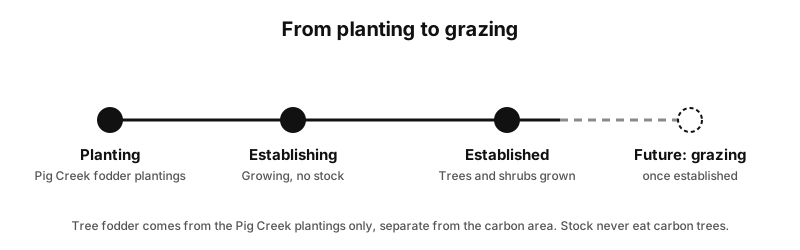
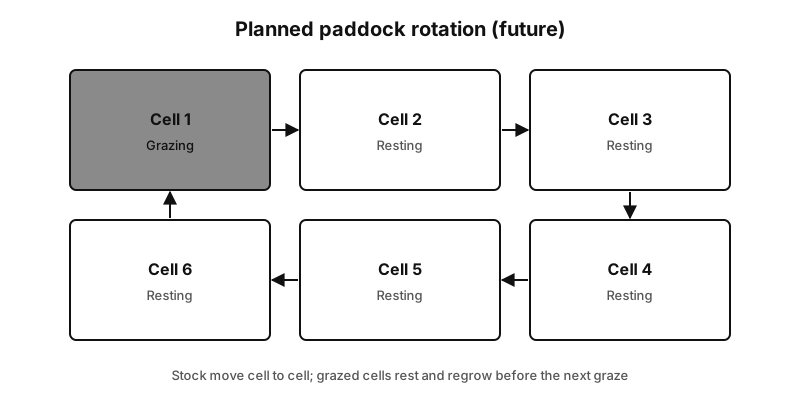
While they establish, we'll keep the stock out so nothing gets eaten down or trampled. Once they're big enough, we'll bring the animals in for short, light grazes and then move them on, so the plants have time to grow back. Virtual fencing will make those moves much easier once our collars are set up.
None of this touches the carbon trees. The stock will never eat those.
Why we're doing it
- Shelter. Rows of trees and shrubs will take the edge off the wind, which matters for the animals in a cold Tower Hill snap.
- Shade. Summer shade will help keep the stock cool and settled on hot days.
- Soil. Deep roots and leaf litter will feed the soil life and help hold the ground together.
- Water. Working with the swales, the plantings will help the rain soak in where it falls instead of running off.
- Biodiversity. More layers mean more homes and food for birds, bees and insects.
- Animal welfare. Shelter, shade and a green bite in the lean times all add up to more comfortable, better-fed animals.
From planting to grazing
- Swales first. We dug our swales on contour in 2023, as our own farm water works.
- Plant. Fodder trees and shrubs go in at Pig Creek.
- Establish. The young plants get time to put their roots down.
- Protect. The stock stay out while the plants are young.
- First light grazing, once established. Short visits, then the animals move on.
- Rotate. Graze, rest and regrow, in turn.
We're not putting dates on the later stages, because trees grow at their own pace.